Hi everyone, I’m Anchi Wu.
Throughout our project journeys, I completely understand how many of our clients feel—everyone wants to see as many pristine, highly detailed 3D Renderings as possible before construction begins. Watching a future playground filled with laughter come to life on a computer screen is undeniably exciting.
At Huadong Amusement, we have always proudly provided Free Playground Design Services. In the early stages of our communication, whether you need those design concepts to present to end-clients, keep for your own reference, or share with friends, we will always do our best to help you visualize that ideal blueprint.
But today, speaking to you as an old friend, I want to share an honest truth: we don't advocate spending excessive time on hyper-realistic renderings.
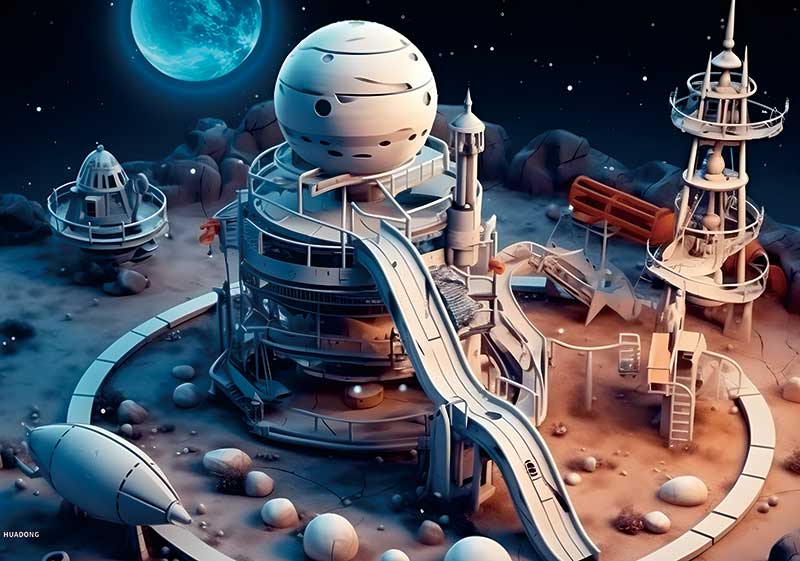
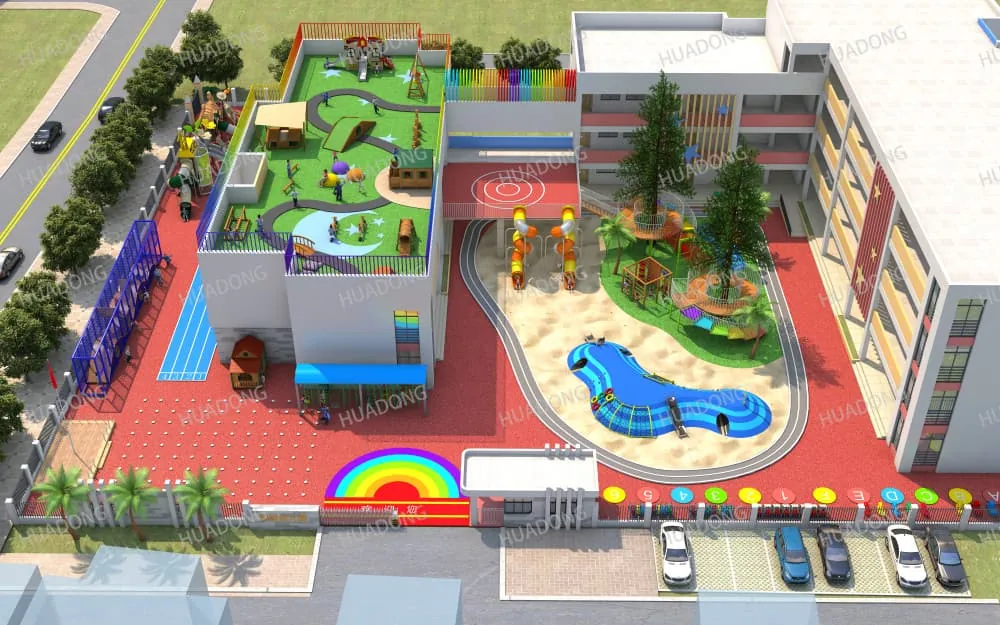
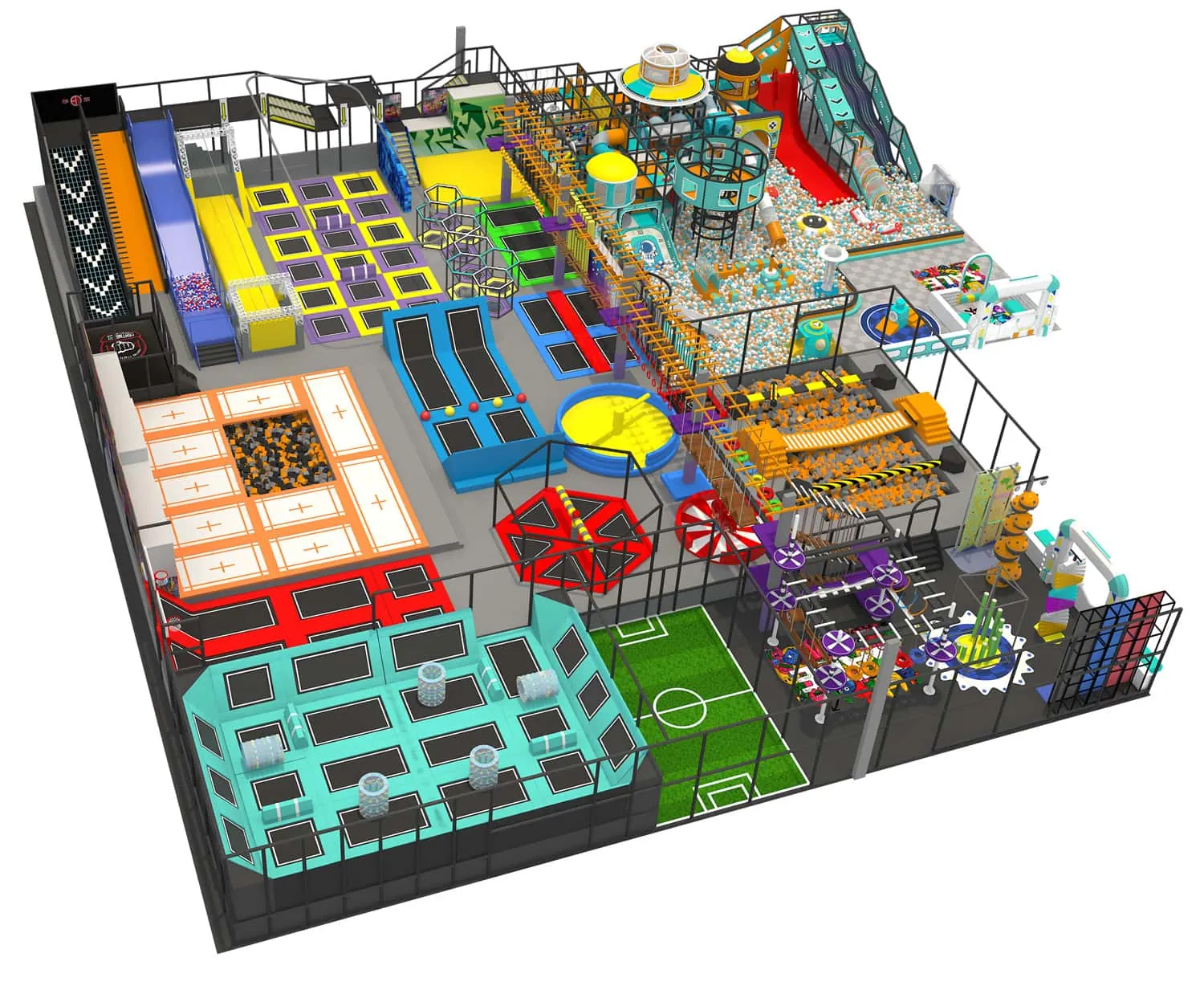
3D-Rendered Planet Themed Amusement Park Behind every stunning, meticulously polished illustration lies an immense, often invisible workload. These non-essential, hidden costs consumed during the preliminary stages ultimately find their way into the final product price. To help you spend every penny where it matters most—on the high-quality equipment itself—I’d like to gently break down the actual workflow behind those "beautiful pictures."
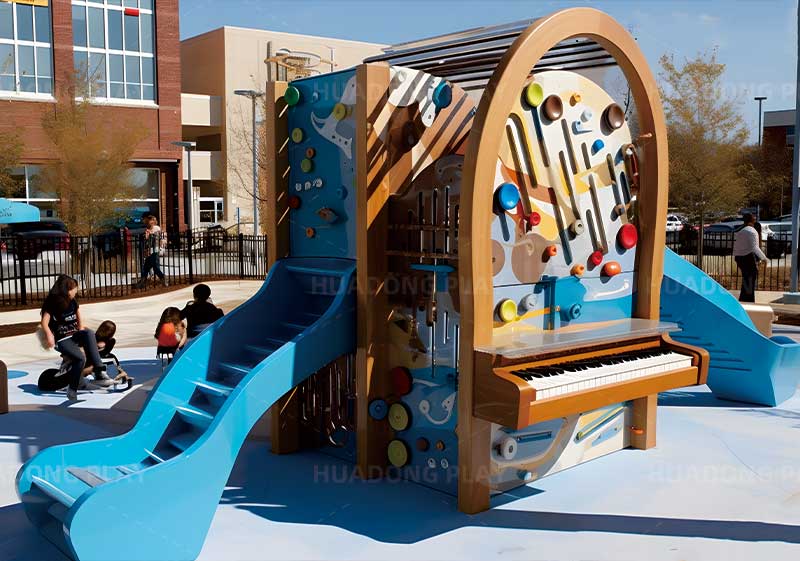
3D-Rendered Music Theme Park
1. The Hidden Workload Behind a Single Rendering
When discussing Custom Playground Equipment, design is never as simple as "dropping toys" into a digital field. It requires strict engineering logic:
Intense Cross-Department Communication: Sales representatives must constantly align with designers to clarify spatial flow and general product placement. While AIGC (Artificial Intelligence Generated Content) now handles some of our initial conceptual inspiration, it still cannot replace massive amounts of detailed, human-to-human coordination.
Rigorous Custom 3D Modeling: Designers must adjust every single structural component down to the millimeter based on the Site Dimensions you provide.
Tedious Environment and Texture Styling: To make a rendering look attractive, designers spend hours crafting surrounding landscaping, lighting, sky backdrops, and realistic material textures.
The most disheartening part for a design team is when days of heartfelt work are met with a casual, "This isn't really what I was looking for"—or when, for various reasons, the design files are never even opened by the client.
Furthermore, because Non-standard Play Structures involve an intricate mix of processing techniques, design software, hardware power, and material selection, a tiny misalignment in early sales communication means a designer's energy gets entirely consumed by endless revisions.
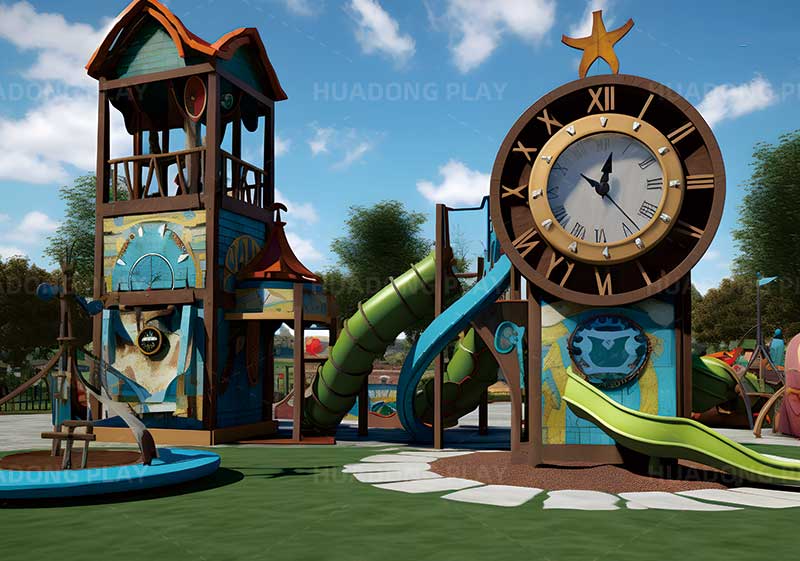
3D-Rendered Clock Theme Park
2. The Ideal Partnership: Letting Professionals Do Best What They Do Best
To break this inefficient cycle and bring projects to life faster and more cost-effectively, we believe the ideal state of collaboration is actually quite simple:
"Leave the framework to us, leave the craftsmanship to us, and keep the choices for yourself."
We set the basic structure and safety baselines: As a team that actively participates in drafting national safety standards, we ensure that every structure fully complies with strict global regulations, such as the EN 1176 playground safety standard.
We select the materials and optimal processes: Based on your site's actual needs, we pair the design with the most ideal weather-resistant materials and manufacturing techniques.
You choose the custom styles and finishes: You simply pick the custom themes or decorative styles that match your personal taste.
By working this way, our designers can shift their core focus away from "painting a pretty digital backdrop" and dedicate it entirely to optimizing the actual structure, durability, and texture of the product.
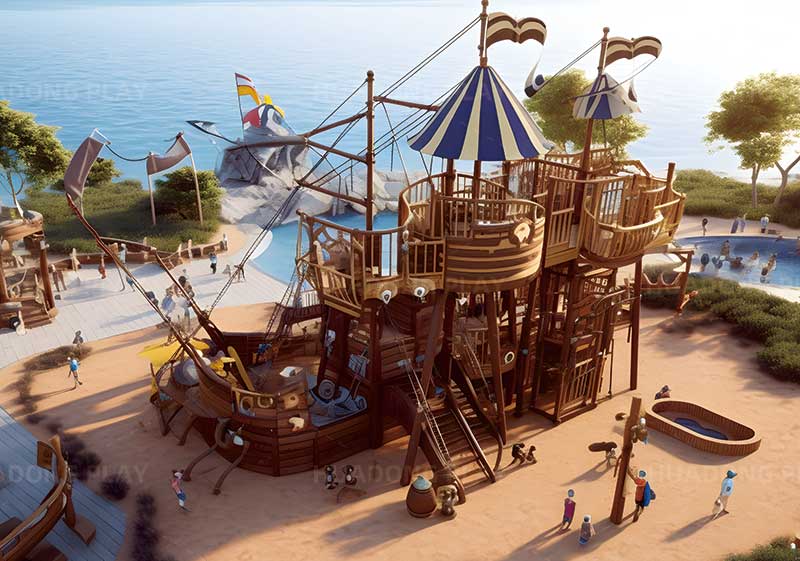
3D-Rendered Pirate Ship Theme Park
3. Giving Us a "Certain Stage" to Build Upon
With this in mind, I would also like to extend a gentle request: whenever possible, please provide us with finalized site dimensions before the design process begins.
In past projects, we have occasionally run into awkward situations where a designer carefully crafts a complete set of custom equipment, only for the client to discover that the actual site boundaries have changed. This leaves the design team in a tough spot—they want to preserve the perfect model they've already drawn, but adjusting it within new constraints is incredibly difficult. Redoing it entirely delays the project timeline, and we always worry that the momentum might be lost in the wait.
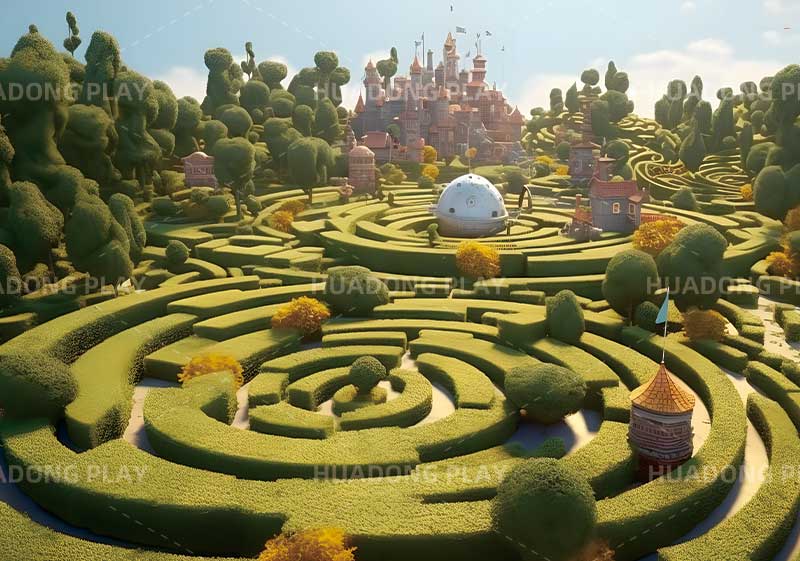
3D-Rendered Maze Theme Park
Closing Thoughts
No matter how advanced software and technology become, the essence of a playground will always be safety and joy in the physical world.
The reason Huadong Amusement doesn't encourage over-rendering is that we prefer to spend our time and energy where it counts: optimizing production-line techniques, strictly controlling material weatherability, and using CNC and 3D printing technologies to bring perfect structures to life in a 1:1 reality.
Whenever a client has a clear requirement, we will always do our best to meet it. But what we look forward to most is working alongside our old friends to build the safest, most engaging playgrounds in the most logical and efficient way possible.
I look forward to hearing your thoughts.

 Featured Products